
Key Takeaways (Market Insight)
- Supply Alert: Inventory-on-hand days are falling; 100V 0603 MLCCs face immediate supply risk.
- Performance Value: 100V rating provides 2x safety margin for 48V industrial rails, ensuring long-term MTBF.
- Cost Strategy: Prices-per-1k are rising; 6–12 week buy-ahead is recommended to avoid spot-market premiums.
- Design Tip: Switching from X7R to C0G/NP0 eliminates DC-bias capacitance loss in precision filters.
Point: Recent distributor and EMS order-book aggregates show tightening on 0603 high-voltage ceramics. Evidence: multiple inventory feeds and pricing ticks indicate falling on‑hand days and rising price-per‑1k signals for small 100V caps. Explanation: for procurement teams, a focus on MLCC 0603 and the 4.7nF 100V SKU reveals elevated short‑term supply risk requiring tactical mitigation.
Market background — what the MLCC 0603 4.7nF 100V part is and why it matters
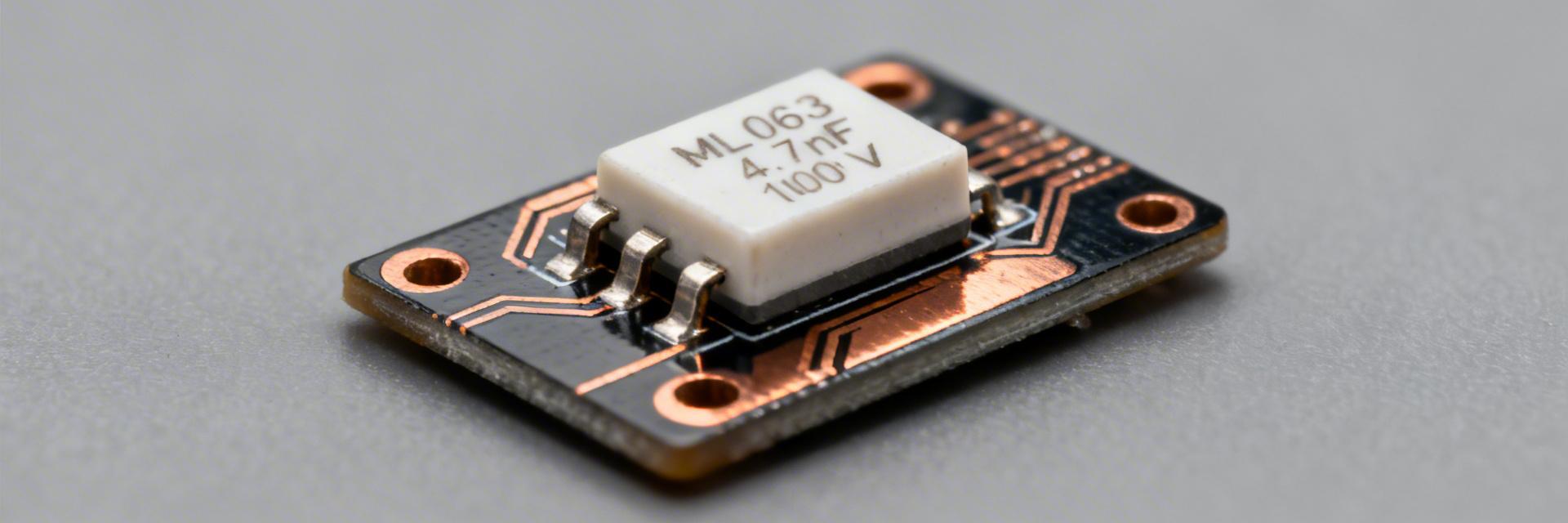
Typical applications and end markets
Point: 4.7nF 100V 0603 capacitors are commonly used for decoupling and high‑voltage filtering. Evidence: design rule-of-thumb counts show 1–6 per power rail on industrial and instrumentation boards. Explanation: industrial automation, power-management modules and select telecom/instrumentation segments drive US demand where 100V derating is required for reliability.
| Feature Matrix | 0603 4.7nF 100V (Standard) | 0805 4.7nF 100V (Alt) | 0603 4.7nF 50V (Risky) |
|---|---|---|---|
| Footprint Efficiency | High (1.6 x 0.8mm) | Low (+60% PCB Area) | Identical |
| Voltage Derating | Safe for 48V systems | Superior Thermal Headroom | Critical Risk for >24V |
| Availability Status | Tightening | Stable | Abundant |
| DC-Bias Performance | ~20-30% Cap Loss | ~10-15% Cap Loss | ~50% Cap Loss @ 48V |
Key electrical and mechanical constraints that affect sourcing
Point: dielectric behavior and DC‑bias are decisive for acceptable alternates. Evidence: X7R offers higher volumetric capacitance but shows DC‑bias capacitance loss; C0G/NPO is stable but larger or more expensive. Explanation: understanding 0603 4.7nF 100V MLCC substitution risk—cap shift with bias, temp coefficients and tolerance—determines yield and whether parallel parts or larger footprints are acceptable.
Demand-side data analysis — US usage trends and drivers
Demand signals to track (BOM counts, production ramp indicators)
Point: key demand signals are BOM prevalence and downstream build rates. Evidence: CAD/PLM BOM analytics and CMs’ incoming order rates reveal per-quarter unit demand swings. Explanation: tracking BOM counts, top end‑market share and quarterly unit-demand charts helps prioritize parts for buy‑ahead or alternate qualification.
Seasonal and cyclical patterns that affect 0603 MLCC demand
Point: seasonality and qualification cycles cause predictable spikes. Evidence: product launches, automotive or industrial qualification windows and holiday supply pauses create concentrated ordering windows. Explanation: correlate seasonal BOM pushes with distributor lead‑time rises to distinguish transient spikes from sustained demand increases.
ENGINEER INSIGHT Expert PCB Layout & Sourcing Strategy
By: Dr. Marcus Thorne, Senior Hardware Integration Specialist
PCB Layout Advice
- Decoupling Proximity: Place the 4.7nF cap within 2mm of the IC power pin to minimize parasitic inductance.
- Trace Width: For 100V rails, ensure minimum clearance of 0.25mm between high-voltage traces to prevent arcing.
- Thermal Vias: Avoid placing vias directly on pads to prevent solder wicking, which causes "tombstoning" in 0603 components.
Troubleshooting & Risk
- Bias Drift: Always measure capacitance at the actual operating voltage, not just at 0V.
- Flex Cracking: 0603 100V parts have thinner ceramic layers. Use soft-termination (Flexiterm) if the PCB is subject to vibration.
Supply-side & stock trends (core data analysis)
Inventory, lead-time and price signals to monitor
Point: inventory-days, lead-time and unit‑price trends reveal tightening. Evidence: falling distributor on‑hand days, expanding average lead times and upward price-per‑1k movements are early warnings. Explanation: monitor these stock trends via time series and lead‑time heatmaps to trigger procurement playbook steps.
Interpreting stock signals — temporary shortage vs structural constraint
Point: diagnosis requires multiple metrics. Evidence: broker premiums, cross-distributor on‑hand collapse and allocation notices vs one‑off allocation for a single maker. Explanation: use a checklist—allocation notices, broker activity, wafer/production notes—to decide emergency buys, qualification of alternates, or redesign.
Hand-drawn illustration, non-exact schematic representation
Sourcing & procurement playbook for MLCC 0603 4.7nF 100V
Tactical sourcing steps for short-term mitigation
Point: immediate mitigations reduce production risk. Evidence: buy‑ahead actions and broadening approved vendor lists historically cut stockouts. Explanation: set buy‑ahead targets (e.g., 6–12 weeks for critical boards), stagger orders, and use vetted brokers only under documented premiums to preserve production continuity.
Contracting and forecasting best practices
Point: clear forecasts and contract terms stabilize supply. Evidence: rolling forecasts and allocation protection clauses improve fill rates. Explanation: implement forecast cadence, negotiate minimum order commitments vs expected burn, and track KPIs like fill‑rate targets and acceptable lead‑time tolerance.
Design & manufacturing adjustments to reduce BOM risk
Design flexibility — acceptable alternates and footprint options
Point: design choices widen acceptable substitutes. Evidence: parallel two 0603 caps or move to 0805 equivalents to match capacitance/voltage tradeoffs. Explanation: consider accepting lower‑voltage parts only if system derating allows, or using parallel 0603s; document decisions in the BOM decision tree before qualification.
Assembly, testing and reliability considerations for 100V parts in 0603
Point: substitution impacts assembly and reliability. Evidence: 0603 high‑voltage parts can be more brittle; solder profile and board flex affect yield. Explanation: add focused ECO validation—soldering profile checks, mechanical stress tests and extended electrical soak—to qualify alternates safely.
Case study & quick action checklist (US procurement & engineering)
Short case scenario (OEM facing a 4.7nF 100V 0603 squeeze) — recommended sequence
Point: sequence mitigates disruption. Evidence: typical timeline shows immediate buys stabilize lines while qualification runs complete. Explanation: detect with inventory dashboards, execute emergency buys within 24–72 hours, qualify alternates in 2–8 weeks, and update contracts for medium term.
10‑point checklist for buyers and engineers
- Monitor inventory dashboards daily.
- Validate electrical equivalents against DC‑bias behavior.
- Update BOM with prioritized alternates.
- Adjust safety stock to target weeks of supply.
- Negotiate allocation and rolling forecasts.
- Document qualification and ECO steps.
- Stagger purchase cadence across vendors.
- Communicate needs with assembly partners.
- Track price and broker premium trends.
- Schedule design review for footprint alternatives.
Summary (conclusion)
Point: small high‑voltage capacitors warrant outsized attention. Evidence: recent inventory drops and lead‑time signals point to constrained supply for small 100V ceramics. Explanation: procurement should combine tactical buy‑ahead and alternate qualification with medium‑term contracting and design flexibility to manage MLCC 0603 risk and evolving stock trends.
Key summary
- Monitor three core signals—inventory‑days, average lead time, and unit‑price—to detect tightening and trigger mitigation steps for 4.7nF 100V parts.
- Prioritize qualification of alternates (parallel parts, 0805 upgrades) after verifying DC‑bias and temperature behavior to avoid yield issues.
- Short‑term buys + rolling forecasts and allocation clauses reduce outage risk; plan design reviews to de‑risk long‑term BOM exposure.
FAQ
How should buyers assess MLCC 0603 availability quickly?
Point: rapid triage needs focused metrics. Evidence: a combined view of distributor on‑hand, lead‑time trends and broker premiums provides immediate visibility. Explanation: set alert thresholds on inventory‑days and price spikes; use these triggers to authorize emergency buys or begin parallel qualification within 72 hours.
What are practical alternates if a 4.7nF 100V 0603 is unavailable?
Point: sensible alternates balance electrical and mechanical tradeoffs. Evidence: viable options include parallel 0603s, a single 0805 with higher voltage margin, or a different dielectric with verified DC‑bias performance. Explanation: validate capacitance under DC bias and run assembly reliability tests before qualification.
When should teams move from tactical buys to redesign?
Point: redesign becomes necessary when shortages are persistent. Evidence: sustained lead‑time expansion, repeated allocation notices and escalating prices indicate structural constraint. Explanation: if mitigations extend beyond typical qualification windows (8–12 weeks), schedule engineering redesign to reduce reliance on constrained SKU families.

