
Engineers select NP0/C0G MLCCs for precision circuits because of near-zero temperature coefficient and superior stability under DC bias.
The 06031A181F4T2A datasheet highlights 180pF nominal capacitance, 100V rating, C0G/NP0 dielectric, and 0603 package.
This article proves those claims with reproducible test methods and answers design, test, and procurement questions for production validation.
Note: Expect actionable measurement setups, pass/fail criteria, and QA checklists. The sections below cover quick specs, electrical curves, test procedures, layout and derating guidance, reliability tests, and incoming inspection. Follow these steps to confirm manufacturer documentation and validate lot performance before assembly.
Datasheet at a Glance: Quick Specs for 06031A181F4T2A
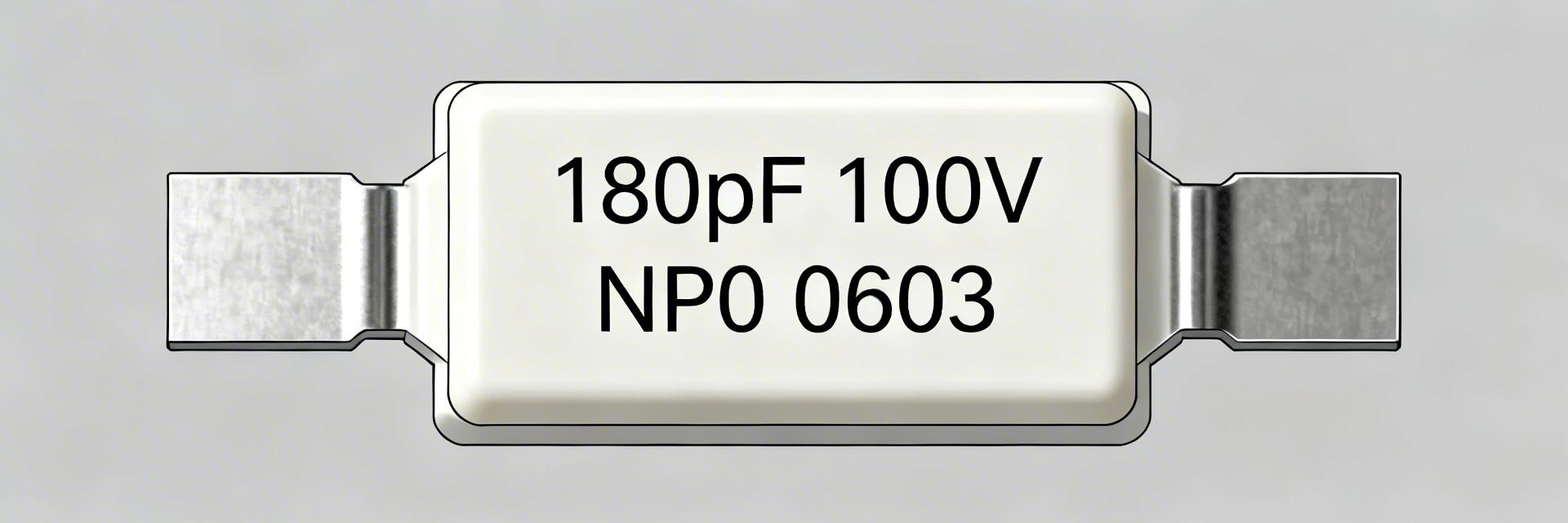
Essential Electrical Specs
Point: Capture the electrical table entries manufacturers publish and verify key fields against supplier documentation. Evidence: a compact reference table below lists the critical entries to record and confirm before acceptance. Explanation: flag any deviations from the listed values and request clarification from the manufacturer or supplier.
| Parameter | Typical Entry / Note |
|---|---|
| Capacitance | 180pF ±1% (verify tolerance field) |
| Rated Voltage | 100 VDC |
| Dielectric | C0G / NP0 (stable temp coeff) |
| Package / Case Code | 0603 |
| Operating Temp Range | -55°C to 125°C (confirm on datasheet) |
| Temperature Coefficient | ≈0 ±30 ppm/°C (confirm spec format) |
| Leakage / Insulation | Typical leakage current / insulation resistance entries |
| Resonant Info | Manufacturer may list self-resonant frequency or ESL |
Note: confirm any blank or approximate fields against the official manufacturer datasheet; avoid assuming values not explicitly stated. The table should include the phrases "180pF 100V" and "NP0 capacitor" when recording your verification notes.
Mechanical & Packaging Data
Point: Mechanical details affect placement, soldering, and reliability. Evidence: record footprint dimensions (L×W×T), recommended land pattern, termination finish (e.g., SnCu, Ni barrier), thickness/height and packing (tape & reel, tray). Explanation: include an annotated footprint diagram and recommend providing a downloadable PNG of the 0603 footprint to PCB fab for accurate land pattern implementation.
Detailed Electrical Characteristics & Performance Curves
Temperature Coefficient Stability
NP0 (C0G) behavior is defined by near-zero temperature coefficient. Engineers must check the capacitance vs. temperature plot to ensure stability.
Voltage & Frequency Response
NP0 capacitors show minimal DC bias dependence. Expected capacitance-vs-voltage change is near zero across practical biases.
Test Data: Recommended Measurements and Reporting
Recommended Test Procedures
Point: Use standardized equipment and defined sample sizes to generate reproducible data. Evidence: test setup should include an LCR meter or impedance analyzer, test frequencies (1 kHz, 100 kHz, 1 MHz), AC test voltage (100–500 mV), and DC bias steps up to rated 100V in a temperature chamber across -55°C to 125°C; sample sizes of 10–30 pcs per lot are typical. Explanation: document instrument model, calibration date, fixturing, and environmental conditions to ensure results are traceable.
How to Present Test Results
Point: Clear tables and labeled graphs communicate compliance and variation. Evidence: report raw measurements and summary statistics (mean, std dev, min, max) in tabular form and produce graphs: capacitance vs. DC bias (pF vs. V), capacitance vs. temperature (pF vs. °C), impedance/DF vs. frequency (Ω or dB / % vs. Hz). Explanation: use SI units on axes, include sample size in captions, and provide pass/fail overlay lines for quick assessment.
Application and Design Guidance for 06031A181F4T2A
Typical Use Cases
A 180pF 100V NP0 capacitor is ideal for precision timing, RF matching/filters, sample-and-hold circuits, and high-voltage bypass. NP0's low temp coeff preserves timing accuracy and filter Q.
PCB Layout & Soldering
Recommend short, symmetric traces and proper land fillet. Avoid mechanical stress; use conservative voltage derating and follow reflow profiles that account for the 0603 small thermal mass.
Reliability & Common Failure Modes
▶ Key Qualification Tests to Request
Point: Request standardized qualification testing to confirm long-term behavior. Evidence: include thermal cycling, humidity/high temp bias, mechanical shock/vibration, mechanical shear, solderability and endurance tests. Explanation: capturing delta metrics after stress reveals degradation modes and supports failure analysis if needed.
▶ Common Failure Signs and Mitigation
Point: Recognize symptoms early and mitigate with design or process changes. Evidence: common issues include mechanical cracking, capacitance shift, elevated DF or leakage. Explanation: mitigate by adjusting PCB fillet, reducing flex, and rejecting assemblies showing visual or electrical anomalies.
Procurement & Inspection Checklist
Datasheet Verification
- ✔ Confirm part marking and numbering
- ✔ Cross-check electrical table entries
- ✔ Verify environmental limits
- ✔ Confirm lot traceability & date codes
Incoming Sample Test
- ✔ Visual inspection (size/termination)
- ✔ Sample capacitance at 1 kHz / 100 kHz
- ✔ Solderability check on sample PCB
- ✔ Maintain traceable record templates

