0526102072 FFC/FPC Datasheet: Complete Specs & Measurements
In compact electronics design, 1.00 mm‑pitch FFC/FPC connectors are a common choice for space‑constrained interconnects. This datasheet‑driven guide provides the exact mechanical, electrical, and assembly parameters needed to minimize NPI risk and optimize PCB layout.
Background: What the 0526102072 Part Represents
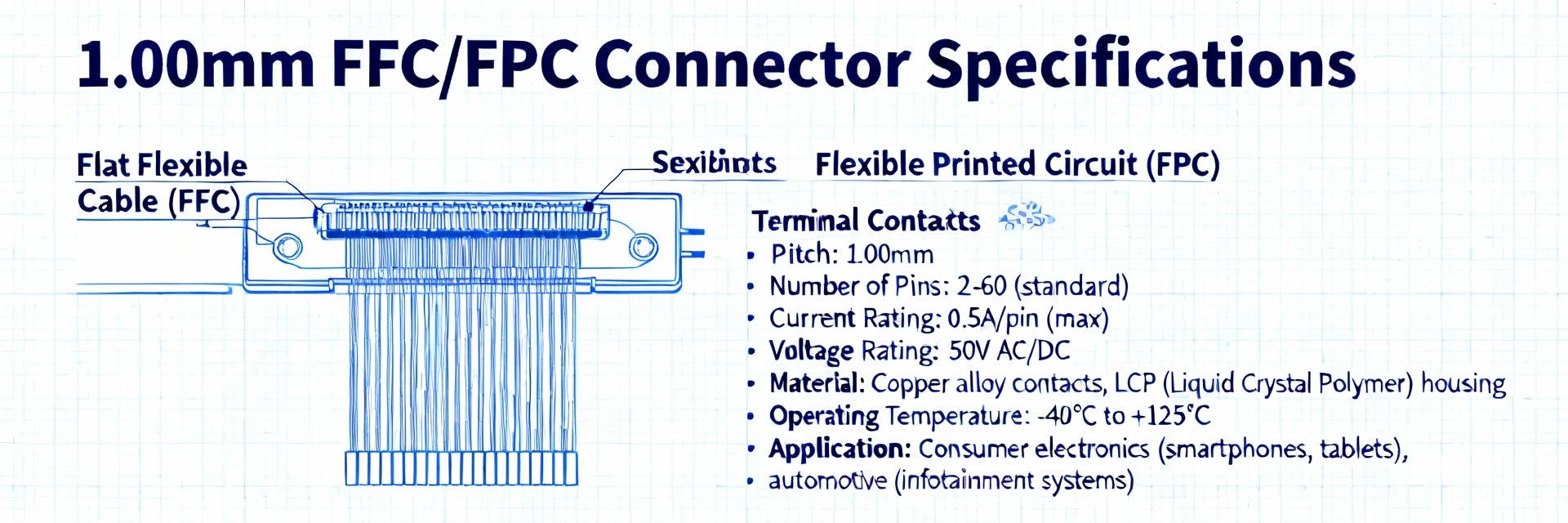
Key Mechanical Overview
Point: Part of the 1.00 mm‑pitch FFC/FPC connector family, essential for display, camera, and board‑to‑flex interfaces.
Evidence: Configured with 20 positions in a single row, vertical mating, and a ZIF/LIF actuator.
Explanation: Accurate recording of pitch and mating direction ensures CAD land-patterns are validated before production.
Electrical & Materials Summary
Point: Material choices define contact performance and durability.
Evidence: Typically features gold over nickel plating to reduce resistance and prevent corrosion.
Explanation: Capturing plating thickness and finish is vital for reliability modeling and long-term wear resistance.
Complete Specifications & Measurements
Dimensional Drawings & Critical Measurements
| Dimension | How to Extract | Unit & Tolerance Format |
|---|---|---|
| Pitch | Center‑to‑center between adjacent contacts |
1.00 mm ±0.05
|
| Connector Length | Overall length including flange | mm ± tolerance |
| Overall Height | Top of actuator to PCB seating plane | mm ± tolerance (inches) |
| FPC Insertion Depth | Maximum distance from front stop | mm ± tolerance |
Pinout, Pad/Footprint and Mechanical Limits
Translate contact locations into CAD land‑pattern rules. Use the datasheet’s recommended land pattern for pad width, length, and solder mask keepout zones. Ensure mechanical keepout areas are accounted for to accommodate levers and retention clips.
How to Read the 0526102072 Datasheet for PCB & Assembly Design
1 Footprint Recommendations
Map datum points from the drawing to the PCB origin. Apply pad center coordinates based on pitch and contact count. Include mechanical support pads or glue dots to prevent flexing during the reflow process.
2 Soldering & Reflow Profile
Follow lead-free reflow profiles. The datasheet lists maximum body temperature and time‑above‑liquidus. Document post‑reflow inspection points such as solder fillet continuity and actuator integrity.
Application Examples & Compatibility Checks
Typical Application Scenarios
For display-to-board flex, signal count and cable orientation are critical. For camera modules, focus on mating depth and shielding. Always match the FPC thickness range to prevent loose connections.
Signal Integrity & Mechanical Stress
Check insulation/dielectric specs for high-speed signals. Route controlled-impedance traces up to the keepout zone and use stitching ground vias if required by the design environment.
Action Checklist & Troubleshooting
Pre-production Checklist
- Confirm pitch (1.00 mm) and contact count (20).
- Validate pad dimensions in PCB CAM software.
- Verify FPC thickness matches cable specifications.
- Obtain full mechanical drawing with tolerances.
Common Failure Modes
- Misaligned footprints leading to shorts.
- Insufficient solder fillets on SMT pads.
- FPC edge tears from improper insertion depth.
- Actuator damage during pick-and-place.
Summary
- Capture every mechanical callout: pitch, contact count, and mating depth for precise CAD translation.
- Validate electrical entries—plating, rated current, and resistance—against product acceptance criteria.
- Follow footprint recommendations exactly, including solder mask and mechanical keepouts, to avoid damage.
