Engineered-system field data and aggregated lab records reveal inconsistent electrical tolerances and thermal behaviors among assemblies labeled as 050938. This comprehensive analysis maps the component family, summarizes core specifications, and compares variants to ensure rapid qualification for critical industrial applications.
Background: Understanding the 050938 Family
Defining "050938 Parts"
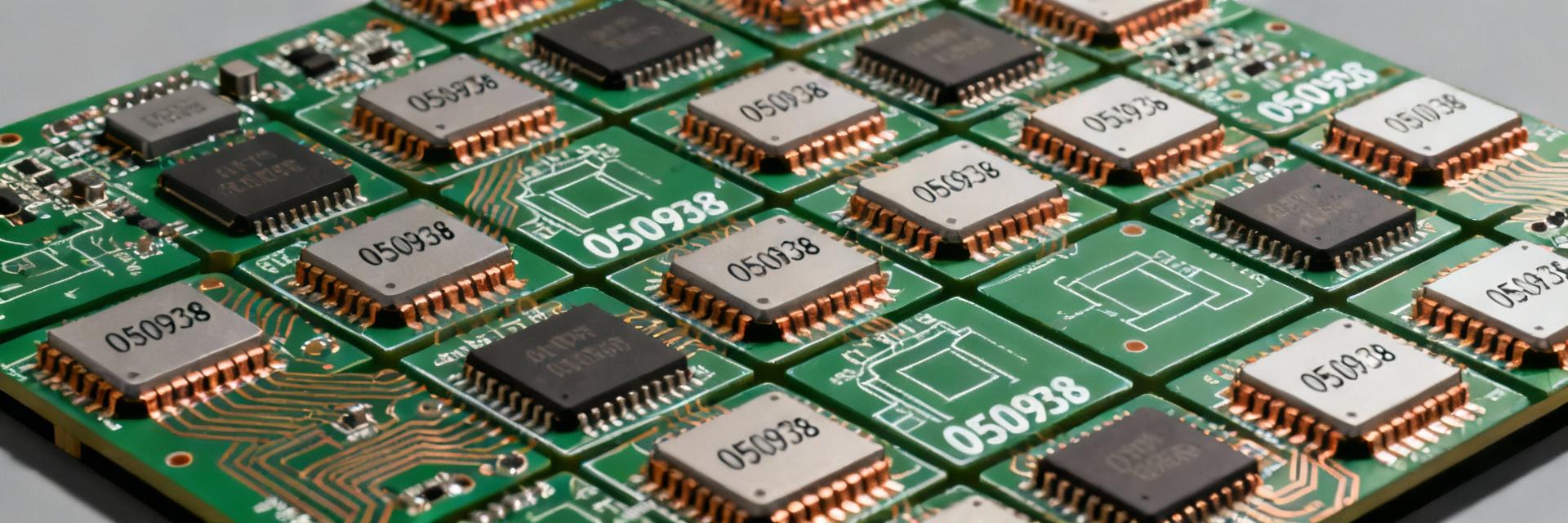
The label "050938 parts" refers to a specific class of modules rather than a singular fixed design. Manufacturing suffixes, revision codes, and cross-referenced lot markings routinely appear in field returns. In practice, this identifier encompasses power modules, connectorized sensor subassemblies, and control interface variants that share a unified footprint but vary significantly in internal componentry.
Critical Evaluation Identifiers
Consistent metadata collection prevents misclassification. Inspection shows that serial/lot numbers, date codes, marking locations, and datasheet revisions are the most discriminating fields. Record PCB silk markings and vendor stencil codes during incoming inspection for full traceability.
Performance Data: Electrical Specifications & Test Metrics
Electrical Performance Metrics
Comparative tests highlight variance in voltage ratings and switching timing. The following represents aggregated stability data:
Thermal & Reliability
Thermal behavior dictates operational longevity. Results are presented as derating curves for engineering margin application.
- • Thermal Resistance: Detailed θJA/θJC metrics across load profiles.
- • Max Junction Limits: Sustained operational safety thresholds.
- • Thermal Cycling: Delta T results for solder joint integrity.
- • MTBF: Approximated life-test reliability benchmarks.
Variant Breakdown & Side-by-Side Comparison
This standardized matrix facilitates rapid validation and eliminates unsuitable candidates early in the design phase.
| Variant Identifier | Voltage (V) | Current (A) | Temp Range (°C) | On‑Resistance (mΩ) | Application Notes |
|---|---|---|---|---|---|
| 050938-A | 12–18 | 6 cont. / 12 peak | -40 to 85 | 45 | Standard thermal path |
| 050938-B | 12–24 | 10 cont. / 20 peak | -40 to 105 | 32 | High-temperature variant |
| 050938-C | 5–12 | 3 cont. / 6 peak | -20 to 70 | 75 | Low-power / compact design |
Decision Criteria
Assess total power and peak current needs → Apply thermal headroom → Verify mechanical space constraints → Evaluate unit cost. Engineering Rule: If thermal margin is below 20%, upgrade to a higher-rated variant.
1 Mechanical & PCB Checklist
- ✔ Adhere strictly to footprint tolerances
- ✔ Specify exact mounting torque bands
- ✔ Define connector mating sequences
- ✔ Preserve clearance and creepage gaps
2 Electrical Validation Plan
A focused validation plan significantly reduces qualification cycles. Minimum required tests include:
Field Case Studies: Real-World Behavior
Case A: High-Current Deployment
Variant B exhibited elevated junction temperatures during intensive duty cycles. Measured temperature rise exceeded datasheet derating thresholds, necessitating improved heat sinking to maintain system stability.
Case B: Supply Substitution
Variant C passed initial functional tests but showed marginal headroom under sustained peak loads. This prompted a critical duty-cycle adjustment during the manufacturing phase to prevent long-term failure.
Troubleshooting Checklist
Execute diagnostic sequence: Verify markings → Measure on-resistance → Perform thermal soak → Inspect solder joints. Log oscilloscope captures of switching events to detect waveform anomalies early.
Lifecycle & Sourcing
Map replacements by electrical delta and thermal class. Require suppliers to provide notification of internal revisions and lock minimum acceptable ranges for voltage, current, and thermal performance in all procurement documents.
Executive Summary
Use comparison matrices capturing voltage, current, and resistance to prevent interchange errors.
Prioritize thermal derating and pulse tests to reveal differences not obvious from static datasheets.
Adopt formal decision flows and change notification requirements to mitigate sourcing risks.
