0505P120GP201X SMD Footprint: How to Create Accurate Pads

A practical, step-by-step pad layout guide for turning datasheet dimensions into assembly-ready footprints that reliably pass DRC and production validation.

This article delivers a repeatable method to create an assembly-ready 0505P120GP201X SMD footprint. We provide a comprehensive checklist for DRC, paste tuning, and prototype validation, ensuring designers leave with actionable pads and a clear plan for prototype success.

Component & Context Overview

Why Footprint Specifics Matter

The 0505P120GP201X is a tiny rectangular passive with short terminations and a small body. Its footprint must reflect those termination shapes precisely to avoid tombstoning and bridging. Tiny passives often have body lengths near 1.27 mm and termination overlaps under 0.3 mm. A mismatched pad can change solder wetting forces; therefore, the footprint is best derived from termination geometry rather than generic libraries.

Data Collection (Datasheet & Assembly)

Collect a concise set of datasheet and assembly constraints before laying pads. Extract body length/width/height, termination length/width/shape, and recommended land pattern. Also, request assembler data: stencil thickness, target paste % by area, and reflow profile. These inputs dictate paste aperture sizing and fillet allowance.

0505P120GP201X SMD Footprint: How to Create Accurate Pads

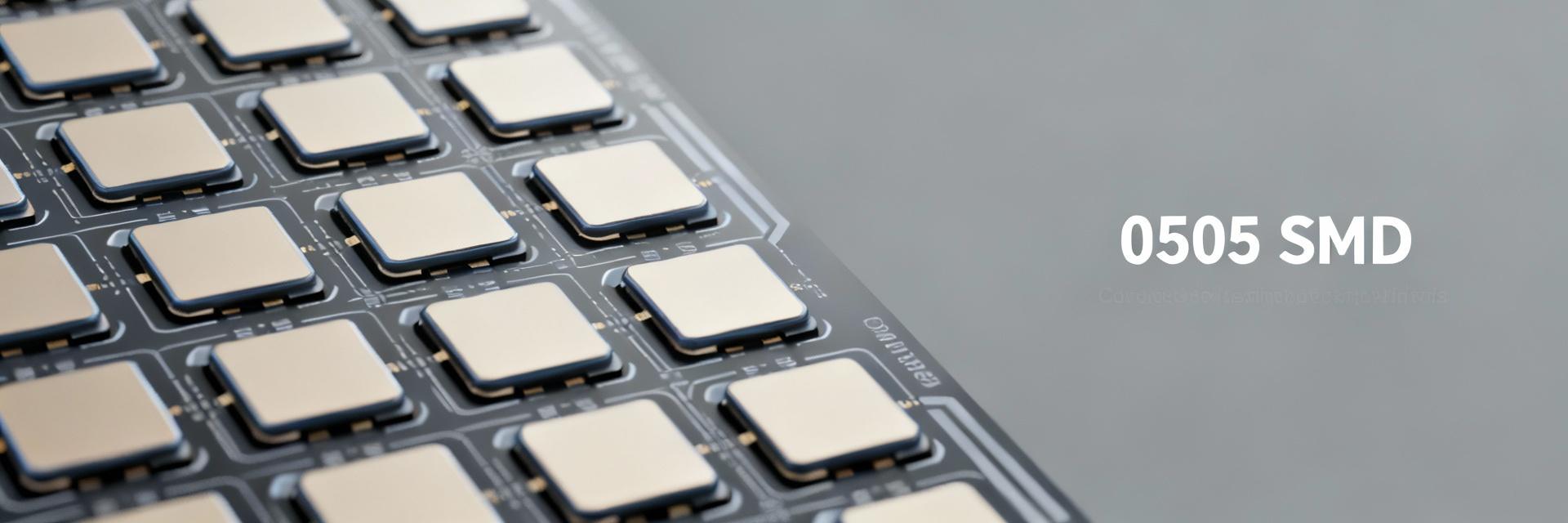
Fig 1. Visual representation of high-precision SMD termination analysis.

Design Rules & Data-Driven Pad Sizing

Core Formulas

Pad Length = Term_L + (2 × Fillet)
Pad Width = Max(Term_W + 0.05, P&P_Min)
Gap = Body_L - 2 × (Overhang)

Use a fillet allowance of 0.15–0.35 mm. For high-control processes, 0.15–0.25 mm is preferred to minimize solder volume issues.

Paste Mask Rules

Target Aperture: 60% – 90% of Copper Area

80% (Recommended)

For the 0505P120GP201X, reducing dimensions by 0.05–0.10 mm per side helps prevent excess solder and tombstoning.

Step-by-Step Footprint Creation

STEP 1

Extract & Compute

Extract dims: Term_L 0.30mm, Term_W 0.25mm. Compute: Pad Length 0.70mm, Width 0.35mm.

STEP 2

CAD Drafting

Draw copper pads, set mask openings, and define paste apertures. Add ref des and courtyard.

STEP 3

Tool Settings

Set origin at component center. Use P1/P2 naming. Ensure 0° reference is standard for P&P machines.

STEP 4

Export Package

Export Gerber, ODB++, Centroid (.csv), and 3D STEP. Confirm units match datasheet (mm).

Verification & Prototype Validation

Run DRC and paste simulations before ordering a stencil. Key checks include minimum pad-to-pad clearance, soldermask slivers, and minimum annular rings.

Validation Step Purpose Success Metric
DRC Analysis Check clearances & slivers Zero manufacturing errors
AOI/X-Ray Inspection Verify fillet size & wetting Uniform fillet on both pads
Feedback Loop Aperture tuning Bridging/Tombstoning

Production-Ready Checklist

  • Datasheet dimensions recorded & metadata attached.
  • Paste reduction (80%) applied and documented.
  • DRC passed (mask slivers, pad clearances).
  • Centroid and 3D model orientation verified.
  • Assembler sign-off on stencil thickness obtainted.

Key Summary

  • Use termination geometry plus a fillet allowance (0.15–0.35 mm) to compute pad dimensions, preserving pick-and-place constraints.
  • Start paste aperture at ~80% of pad area; document the exact % for the assembler to ensure repeatability.
  • Follow the four-step workflow: extract, compute, draw, and export with full assembler communication.

Frequently Asked Questions

How should I size pads for 0505P120GP201X to avoid tombstoning? +
Extract termination lengths and widths, apply a fillet allowance (start 0.20 mm), and consider reducing paste on the higher-wetting pad. Prototype with AOI inspection and iterate: if tombstoning occurs, slightly shorten paste aperture on the offending pad by 10–15% and retest.
What paste aperture % is recommended for 0505P120GP201X? +
Begin with about 80% of the copper pad area as a starting point, then adjust between 60–90% depending on stencil thickness and observed solder volume in the prototype build. Document the chosen % for assembler reference.
How do I communicate my 0505P120GP201X assumptions to the assembler? +
Provide the computed pad dims, paste aperture %, exact stencil thickness, centroid file, and 3D STEP. Ask for a prototype report with AOI/X-ray images and a signed note confirming paste printability before scaling to production.

Summary

Using a repeatable, data-driven method reduces re-spins and yields reliable assemblies: extract termination and body dimensions, compute pad geometry with a conservative fillet allowance, apply a controlled paste reduction, and validate through a small prototype run. The workflow above produces a production-ready 0505P120GP201X SMD footprint when combined with assembler feedback and documented assumptions.

Immediate next steps: Pull the datasheet numbers, run the formulas with your shop’s stencil thickness and paste % targets, generate the CAD pads and centroid files, and schedule a prototype run with AOI inspection to validate paste settings. Keep the validated footprint and notes in your internal library as a canonical pad layout guide for future reuse.

Top