A professional technical verification guide for electrical engineers, technicians, and procurement specialists to ensure system reliability and safety.
Many control panels and power systems suffer repeat downtime because the wrong fuse was chosen — it either opens during harmless inrush or fails to interrupt a real fault. This guide walks you through a step-by-step verification to determine whether the 0505030.MXEP is the right fast-blow 30A ceramic fuse for your specific application.
Learn critical datasheet specs, practical sizing formulas, safe installation protocols, and troubleshooting workflows. Note: Always verify local electrical codes and perform high-voltage work with qualified personnel and proper PPE.
Why Fuse Selection Matters: Protection Basics
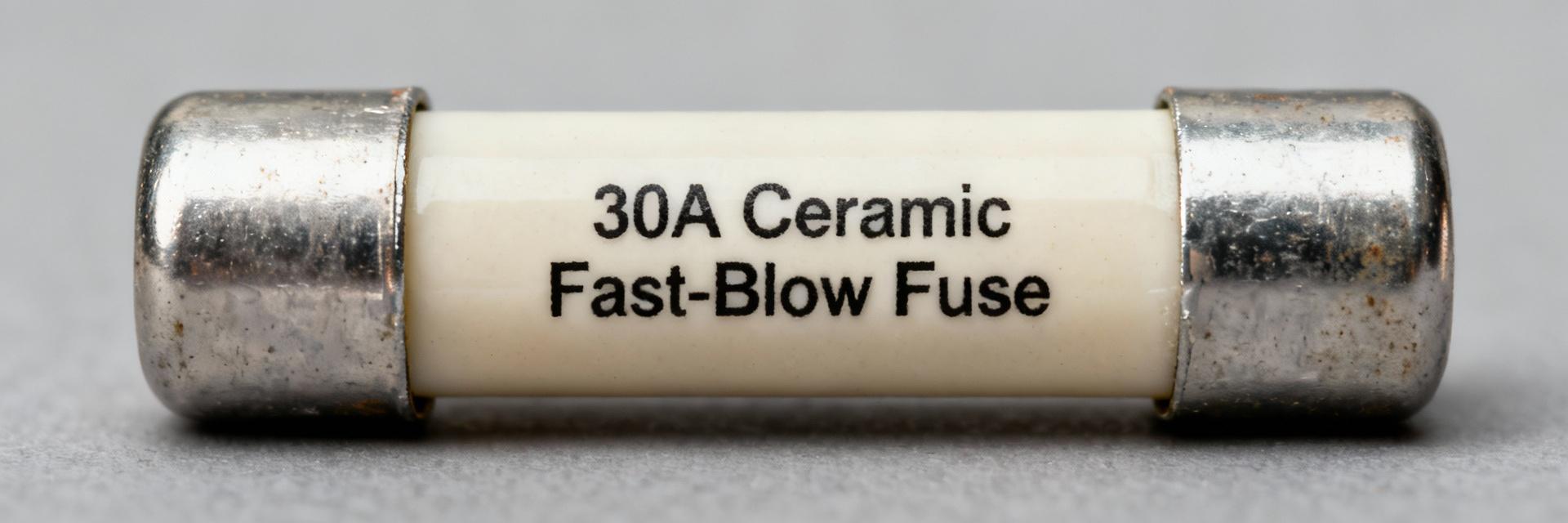
Role of Fast‑Blow Fuses
Fast‑blow fuses react quickly to overcurrent. Compared to slow‑blow types, these devices clear short‑duration faults sooner, limiting energy let‑through (I²t). Use them where solid‑state components or low‑inrush loads require immediate protection.
Ceramic Cartridge Advantages
Ceramic bodies resist thermal shock and contain fault arcs better than glass. They permit higher system voltages and interrupting ratings, making them ideal for hot environments and tight enclosures where thermal stability is paramount.
Datasheet Deep‑Dive: 0505030.MXEP Key Specifications
| Specification Category | Critical Data Point | Application Impact |
|---|---|---|
| Electrical Rating | 30A Nominal Current | Must match continuous load requirements. |
| Physical Size | 6.3 x 32 mm (1/4" x 1-1/4") | Standard cartridge size for industrial holders. |
| Interrupting Rating | High Breaking Capacity | Prevents catastrophic failure during short circuits. |
| Response Type | Fast-Acting (F) | Rapid disconnection for sensitive circuits. |
How to Select the Right Fast‑Blow 30A Ceramic Fuse
Quick Sizing Formula
Example: If your load is 24A continuous: 24A × 1.1 = 26.4A. The 30A 0505030.MXEP is acceptable only if inrush pulses stay below the fuse's short-time tolerance.
- ✔ Match Currents: Start from the measured continuous load and account for expected peaks. If motor or capacitor inrush is large, a fast-blow may nuisance-trip.
- ✔ Verify Voltage: Ensure the fuse's AC/DC voltage class can extinguish a potential arc in your specific system.
- ✔ Interrupting Rating: This must exceed the maximum prospective fault current at the installation point to prevent physical rupture.
Installation, Testing & Verification Procedures
Safe Installation Checklist
- De-energize circuit & apply Lockout/Tagout.
- Verify the fuse part number (0505030.MXEP).
- Inspect fuse holder for corrosion or loose clips.
- Torque contacts per manufacturer specifications.
- Label the circuit and stage nearby spares.
Acceptance Criteria
- Visual inspection: No cracks or discoloration.
- Continuity test: Low resistance reading (Ω).
- Functional test: Monitor load temperature under operation.
- Pass: Load ≤ continuous rating; no nuisance trips.
Failure Modes & Maintenance
Common causes of fuse failure include short circuits, sustained overloads, overheating from poor contacts, or repeated transients. Proactive maintenance reduces downtime.
Diagnostic Flow
Inspect for shorts → Measure steady-state current → Check ambient cooling → Confirm holder torque → Review system event logs.
Summary
Confirm application needs by verifying the 0505030.MXEP specifications against system current, voltage, and interrupting requirements. Account for inrush and ambient derating before final selection.
Frequently Asked Questions
How do I know when to use a fast blow fuse? +
What interrupting rating should the fuse have relative to my system? +
Can I replace a blown fuse with a higher-rated fast blow? +
Safety Disclaimer: This guide provides practical guidance but is not a substitute for official datasheet specifications or local electrical codes. Verify all selections against the official manufacturer documentation and perform high-voltage work only with qualified personnel and proper PPE.
