Selecting the right 1.6A SMD fuse is a common design pain—boards fail in the field because the chosen slow-blow device either nuisance-blows on inrush or can’t clear a high-energy fault. This concise guide provides a checklist-style, data-driven approach to validate the 046501.6DR without guessing footprint, time-current behavior, or breaking capacity.
Quick Overview: What 046501.6DR Is and Where It Fits
One-line Product Role
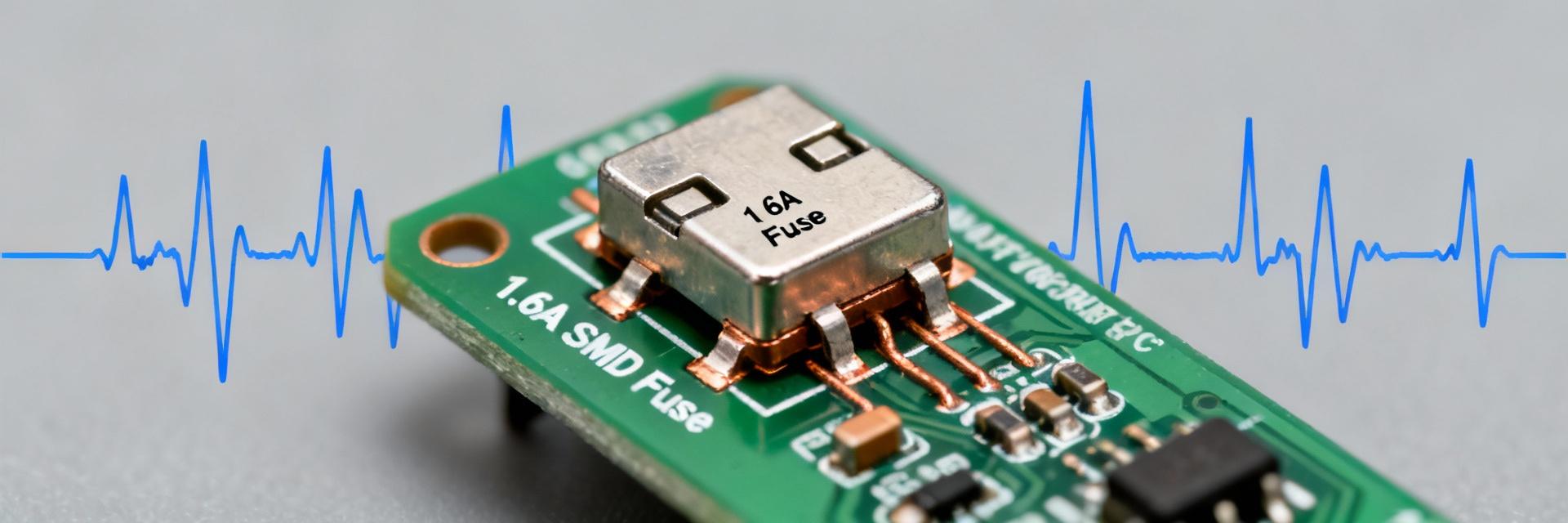
Point: 046501.6DR is a 1.6A rated surface-mount, time-lag (slow-blow) protection device intended to tolerate brief inrush while protecting downstream circuitry.
Evidence: The datasheet specifies a continuous rating of 1.6A and a time-current curve showing delayed clearing at short overcurrents.
Explanation: Designers use this type when short surges (motor or charging inrush) exceed steady current but shouldn’t cause fuse opening during normal events.
Typical Application Envelope
Point: Typical uses include portable power supplies, USB/charger protection, small motor inrush mitigation, and consumer electronics.
Evidence: Recommended voltage ranges and reflow profiles are listed on the manufacturer datasheet; time-lag devices are selected where inrush is short relative to steady load.
Explanation: Verify the fuse’s rated voltage and confirm that time-current behavior holds during expected inrush pulses rather than choosing a fast-acting SMD fuse.
Key Electrical & Mechanical Specs
Rated Current Performance Visualization (1.6A)
How to Choose & Integrate the 1.6A SMD Fuse
Example Use Cases & Troubleshooting
Common Failure Modes
Nuisance blowing typically stems from thermal derating, mis-rated current, or reflow damage. If steady current approaches 1.6A, thermal coupling to large planes reduces effective tolerance.
Application Scenarios
USB Protection: Brief high inrush when chargers connect. BMS Input: Cell balancing transients. Ensure the clearing energy of the fuse is safely below the damage threshold of downstream ICs.
Summary
- ● Validate the 1.6A SMD fuse’s time-current curve against measured inrush and ensure steady current plus margin keeps the part in the hold region.
- ● Confirm breaking capacity exceeds worst-case fault energy and account for ambient/board thermal derating when calculating effective current rating.
- ● Use the manufacturer datasheet for footprint and reflow limits; run reflow and bench surge tests on the populated board before production.
