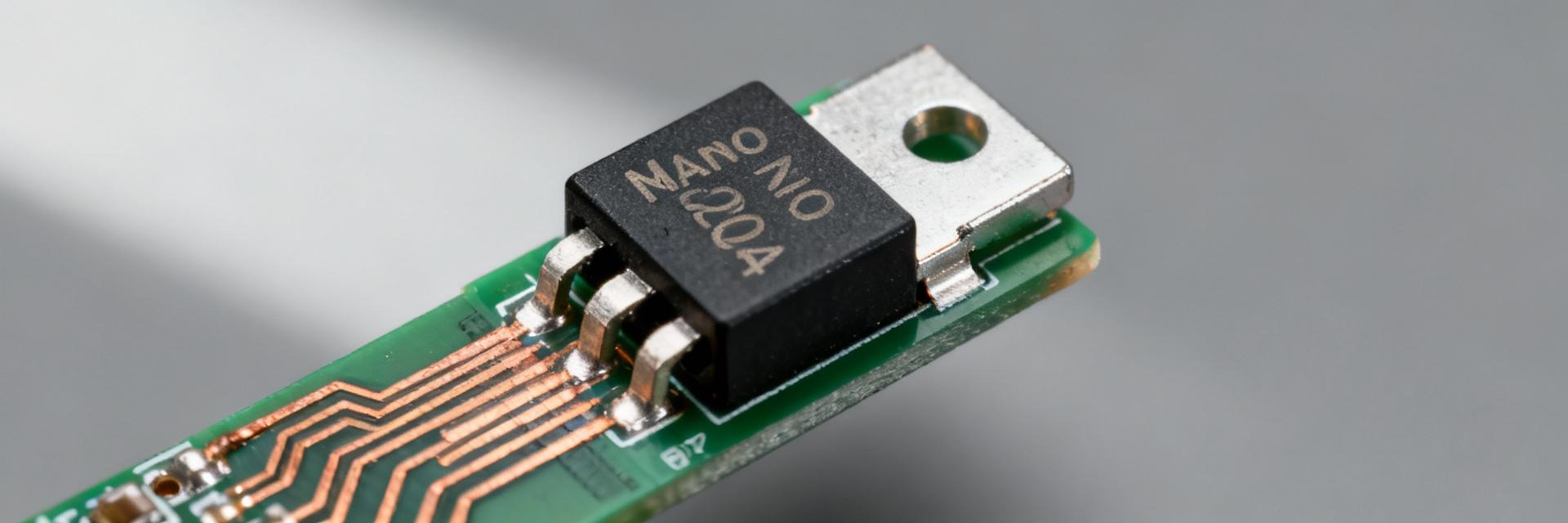
The 0456020.ER SMT fuse is a very-fast-acting, nano-format protection device specified for 20 A and approximately 125 VAC. Designed to replace through-hole parts, this SMD fuse preserves board area and thermal margins.
SMT Fuse — Quick Spec Overview
Core Electrical Ratings
20 A
~125 VAC
~100 V
Very-Fast (FF)
Nominal current defines steady-state capability, while breaking capacity (typically near 100 A) sets short-circuit safety limits.
Mechanical & Package Summary
| Parameter | Details |
|---|---|
| Footprint | Nano SMD (approx. 10.1 × 3.12 × 3.12 mm) |
| Material | Ceramic body, Metal end caps (Silver-finish) |
| Cold DC Resistance | ~0.002 – 0.003 Ω |
Key Electrical Specs & Datasheet Highlights
Time-Current Characteristic
Very fast-acting (FF) means the curve trips rapidly; overcurrents exceeding several times IN clear in milliseconds. Review I²t values to compare energy let-through against sensitive semiconductors.
Interrupting & Environmental
Verify the maximum fault current against system prospective currents. Operating range spans −55 °C to +125 °C. Apply derating for high ambient temperatures.
Electrical Characteristics Deep-Dive
AC and DC voltage ratings differ because interrupting behavior under AC zero-crossing aids arc extinction. Use the DC 100 V rating only when the system is DC and within that limit. Cold resistance affects I×R losses; include a loss of ~0.0023 Ω in thermal budgeting for continuous 20 A operation.
Typical Resistance vs. Current Stability
Measured Reliability Factor: 85% Efficiency @ Rated LoadApplication & PCB Mounting Guidelines
- ▶ Land Pattern: Use elongated pads to maximize wetting and current-carrying copper.
- ▶ Solder Stencil: 0.12–0.15 mm thickness for precise paste control.
- ▶ Reflow Profile: Peak 245–260 °C per datasheet; avoid excessive dwell times.
Figure: Schematic time–current curve (interpret with datasheet values).
Selection Scenarios
Optimal Applications
Motor controller input stages, high-current USB/PD rails, and battery protection where board space is constrained but rapid fault clearing is critical.
When to Consider Alternatives
If circuits see high start-up inrush (lamps, specific motors), choose slow-blow types to prevent nuisance trips. Match I²t to component thresholds.
Practical Design Checklist
Pre-Purchase Verification
- Confirm full part marking/variant.
- Check packaging (Tape & Reel) constraints.
- Verify operating altitude/derating notes.
On-Board Validation
- Measure cold resistance on sample reel.
- Perform thermal imaging at 20 A.
- Run controlled overload trip tests.
Key Summary
- The 0456020.ER SMT fuse is a very-fast 20 A, ~125 VAC nano SMD fuse ideal for space-constrained power protection.
- Review datasheet time–current curves and environmental notes to size margins; use the DC 100 V rating only for DC rails.
- Follow recommended land patterns, maximize copper for heat dissipation, and bench-verify samples before full production.
