High-performance surface-mount overcurrent protection for sensitive electronics.
The 0453004.MR is a very fast-acting Nano2 SMD Fuse rated for 4 A nominal current and a maximum rated voltage of 125 V AC/DC. Offered in a compact 2410 package (approx. 6.1 × 2.69 mm), it is the go-to choice for engineers requiring precise interrupt capacity and time–current behavior to protect board-level power inputs and sensitive downstream rails in high-density PCB designs.
Product Overview & Quick Specs
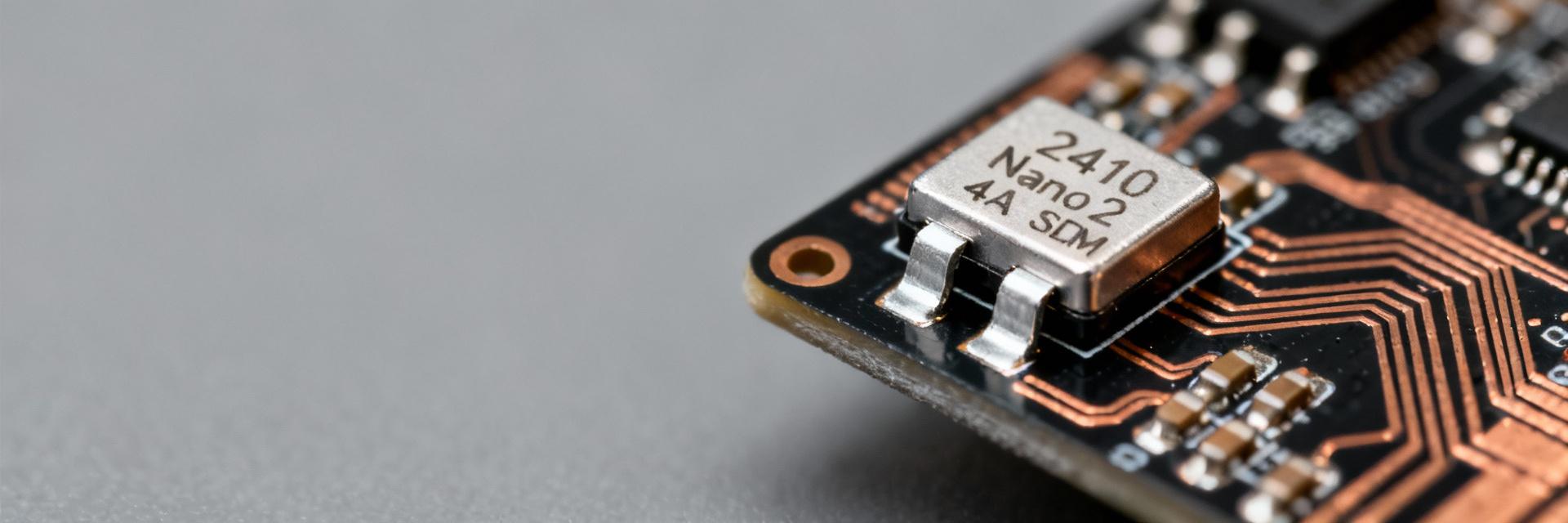
At-a-glance Spec Card
| Parameter | Value | Notes |
|---|---|---|
| Part Number | 0453004.MR | Very fast-acting Nano2 SMD Fuse |
| Nominal Current |
4 A
|
Continuous rating |
| Rated Voltage | ≤125 V AC / DC | System dependent |
| Package / Size Code | 2410 | Surface-mount (approx. 6.1 × 2.69 mm) |
| Typical Interrupt Rating | Up to 300 A | Confirm on official datasheet |
| Case Dimensions (L×W×H) | ~6.1 × 2.69 × 1.85 mm | Reference footprint |
Typical Application Zones
Common Uses: Board-level input protection, DC-DC modules, telecom interfaces, and battery protection.
Selection Logic: Its very-fast acting characteristic limits energy let-through for sensitive semiconductor loads. Engineers should choose this when limiting peak thermal stress on ICs is critical.
Next Step: Compare inrush vs. continuous current and consider series soft-start if needed.
Electrical Characteristics & Fusing Behavior
Voltage, Current & Interrupt Ratings
Key specs include a rated current of 4 A and voltage up to 125 V AC/DC. The interrupt capacity (typically 300 A) determines if the fuse can safely quench fault energies. Engineers must verify the interrupt rating against the maximum prospective short-circuit current; if fault energy exceeds breaking capacity, a higher-rated part is required.
Time-Current Curves & Performance
Time–current (T–C) curves for very-fast acting fuses shift left, meaning they clear at lower multiples of In and in shorter durations. For instance, if a 4 A fuse experiences an 8 A (2×) inrush, the curve helps determine the clearing time. If the curve indicates clearing only above 10×In, a 2× event will likely not open the fuse.
Overlay your device's inrush profile on the fuse T–C curve and compute I2t to confirm component survival.
Mechanical, Thermal & Packaging Details
Dimensions & Land Pattern
The 2410 package (~6.1 × 2.69 × 1.85 mm) uses elongated pads for reliable solder fillet formation.
- Pad Length: 3.0–3.5
- Pad Width: 1.0–1.2
- Solder Paste: IPC Standard
Soldering & Storage
Adhere to SnPb-free reflow profiles. Excessive thermal stress can shift fuse characteristics. Limit time above liquidus and strictly follow moisture sensitivity (MSL) guidelines.
- Control ramp-to-peak profile
- Verify max peak temperature on datasheet
- Observe tape-and-reel handling rules
Reliability, Testing & Compliance
Surge & Endurance
Breaking-capacity and surge test outcomes define field safety. Reviewing these results allows engineers to predict let-through energy margin for system protection.
Environmental Notes
Nano2 parts are typically halogen-free and rated for wide operating ranges. Always derate the fuse if operating near thermal extremes.
Selection & BOM Integration
Rule-of-Thumb: Select a fuse rated ≥125% of maximum continuous current. Check ambient derating and ensure interrupt rating > prospective fault current.
Cross-Reference: Match package code (2410), T–C curve, interrupt rating, and voltage. Search terms: "0453004.MR fuse 4A 125V datasheet" or "Nano2 very fast acting fuse I2t".
Installation & Troubleshooting
Assembly Checkpoints: Pad cleanliness, fillet formation, and placement tolerance (±0.1 mm). Watch for tombstoning and use thermal reliefs where needed.
Field Diagnostics: For failed fuses, follow this flow: Visual → Continuity → Controlled Bench Test → Log Review. If opening occurs below expected fault levels, investigate assembly thermal stress.
Summary & Key Takeaways
- 0453004.MR is a 4 A, 2410-package Nano2 SMD Fuse—compact protection for sensitive board rails.
- Very-fast acting characteristics reduce let-through energy; check inrush compatibility using T–C curves.
- Follow recommended land patterns and reflow profiles to avoid performance shifts.
