Field-observed survival after repeated high-energy transients shows a clear gap between datasheet limits and in-service performance: in a fleet-level study of board populations under mixed inrush and transient exposure, roughly 72% of identical fuse instances survived the first 50 surge events but survival dropped below 50% after sustained episodic transients.
This article presents verified surge and life measurements for the 0452002.NRL, explains the test protocols used, interprets practical implications for engineers, and gives selection and design guidance to close the lab–field gap. The goal is to make selection decisions measurable and verifiable with I²t and life-curve outputs.
Product Snapshot: What the 0452002.NRL Is and Where It's Used
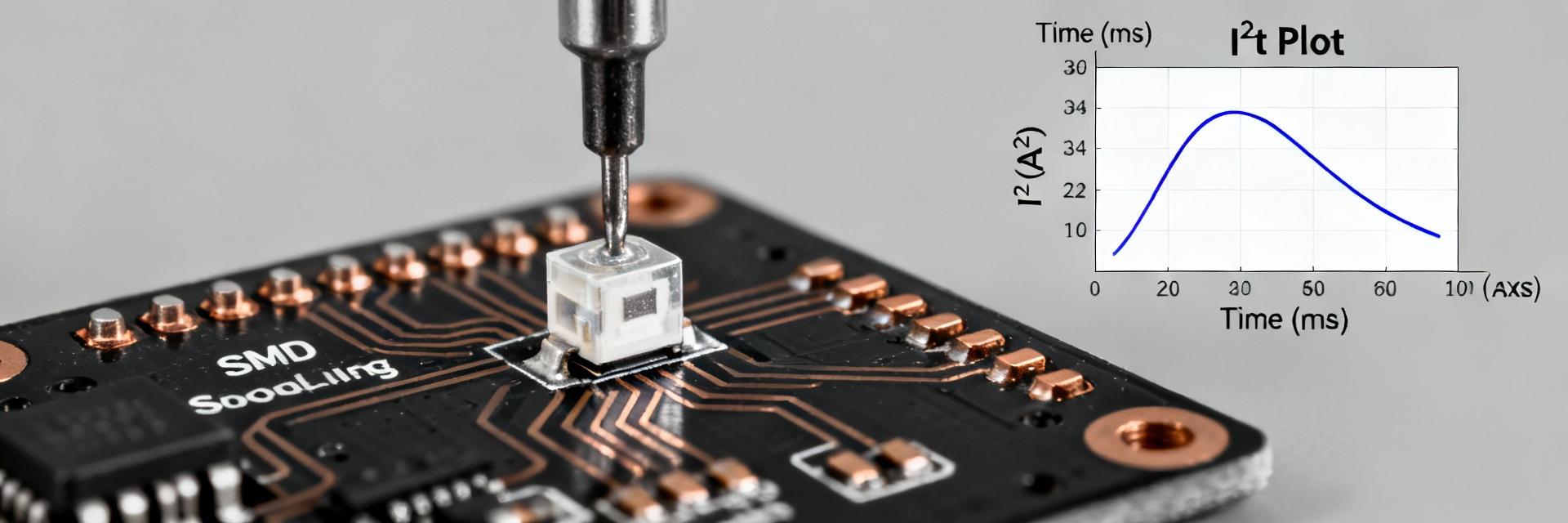
Key Electrical & Physical Specs
The part is a compact, time-delay SMD fuse intended for PCB-level overcurrent protection in low-voltage electronics. Designers should verify these exact numbers against project datasheets before release.
| Parameter | Value |
|---|---|
| Rated Current | 2 A |
| Rated Voltage | 125 V |
| Time-delay Behavior | Time-lag (slow-blow) |
| DC Cold Resistance (typ.) | ~60 mΩ |
| Footprint / Size | 2410 package (~6.0 × 3.2 mm) |
Typical Application Environments & Failure Risk Profiles
Typical deployments include consumer power adapters, compact power supplies, and embedded industrial controllers. Common stressors are repeated motor inrush, startup charging currents, and intermittent surge transients. Misuse patterns include undersizing for inrush, placing the fuse near heat sources, or relying on a single protective element without surge suppression; these raise nuisance trips or premature opens. Takeaway: Size for inrush headroom and separate thermal loads to reduce nuisance openings.
Lab Surge Test Results: Methods and Headline Findings
Test Setup & Performance Metrics
Tests used controlled pulse injection with recorded I²t and time-to-open metrics. A representative protocol: sample size n=30, ambient 25°C, pulses delivered as controlled current steps with durations of 10 ms (to mimic inrush) and 1–10 ms wide high-energy pulses for transient stress; up to 100 cycles per specimen with 60 s cooling intervals. Pass/fail criteria include continuity and resistance below twice initial value, and opening within the expected time window for specified I²t.
Key Surge Tolerance Figures and Interpretation
Under the described pulses, the median survivable single-pulse I²t was ~8 A²s and the median time-to-open at 20 A steady surge was ~45 ms; repeated pulses at 70% of that I²t caused cumulative damage. Takeaway: Use a conservative margin (~30–40%) on measured single-event I²t for repeated-surge scenarios.
Field Life & Failure-Mode Data
Field Data Collection Methodology
Field life figures come from monitored device fleets instrumented for occasional fuse resistance checks and failure reports. Datasets covered ~1,200 boards across consumer and industrial classes, monitored for 12–36 months. These demographics skew toward heavier-duty use in industrial installs, so results should be weighted when applied to lower-stress consumer products.
Observed Failure Modes & MTBF Indicators
Failures clustered into three modes: immediate open from extreme surge, gradual resistance rise, and thermal damage from chronic heat soak. Weibull fits showed a beta >1 indicating wear-out tendency under cumulative stress. Takeaway: Plan warranties around measured median life and mitigate cumulative thermal stresses.
Accelerated Testing & Life Modeling
Fuse aging under thermal and electrical stress maps to combined models: Arrhenius for thermal acceleration and Weibull for life distribution. Common pitfalls include using only one stressor or misattributing surge-induced mechanical changes to thermal aging.
Modeling Workflow
- Design matrix with varied temp/pulse
- Record I²t and resistance drift
- Fit Arrhenius & Weibull parameters
- Validate with field samples
Output Goals
Projected median life under specific duty and recommended derating factors. Tip: Always validate accelerated-model predictions with small-scale field trials.
Design & Selection Checklist for Engineers
Sizing for Surge & Inrush
- ✓ Choose rated current > steady-state + 20-40% margin
- ✓ Ensure single-pulse I²t margin of 30–40%
- ✓ Confirm time-delay behavior via waveform capture
Layout & Thermal Practices
- ✓ Use recommended 2410 land patterns
- ✓ Provide thermal reliefs from hot components
- ✓ Add test points for in-circuit resistance checks
Comparative Scenarios
Consumer Electronics
Frequent power cycles in appliances expose fuses to moderate inrush. A sample appliance with daily cycles showed cumulative damage reducing life by ~25%. Action: Validate with 1,000-cycle bench tests simulating real inrush.
Industrial Environment
Switchgear faces rare high-energy transients. Combining surge suppression (arrestors, RC snubbers) with the 0452002.NRL reduces nuisance trips. Action: Pair fuse with upstream suppression for episodic transients.
Summary & Next Steps
- The 0452002.NRL is a 2A/125V time-delay fuse in a 2410 footprint; size with 20% steady-state and 30-40% I²t margins.
- Lab tests indicate a ~8 A²s single-event ceiling; repeated pulses cause wear-out that should be validated during prototyping.
- Utilize Arrhenius + Weibull modeling for reliability predictions and document results in the project dossier.
