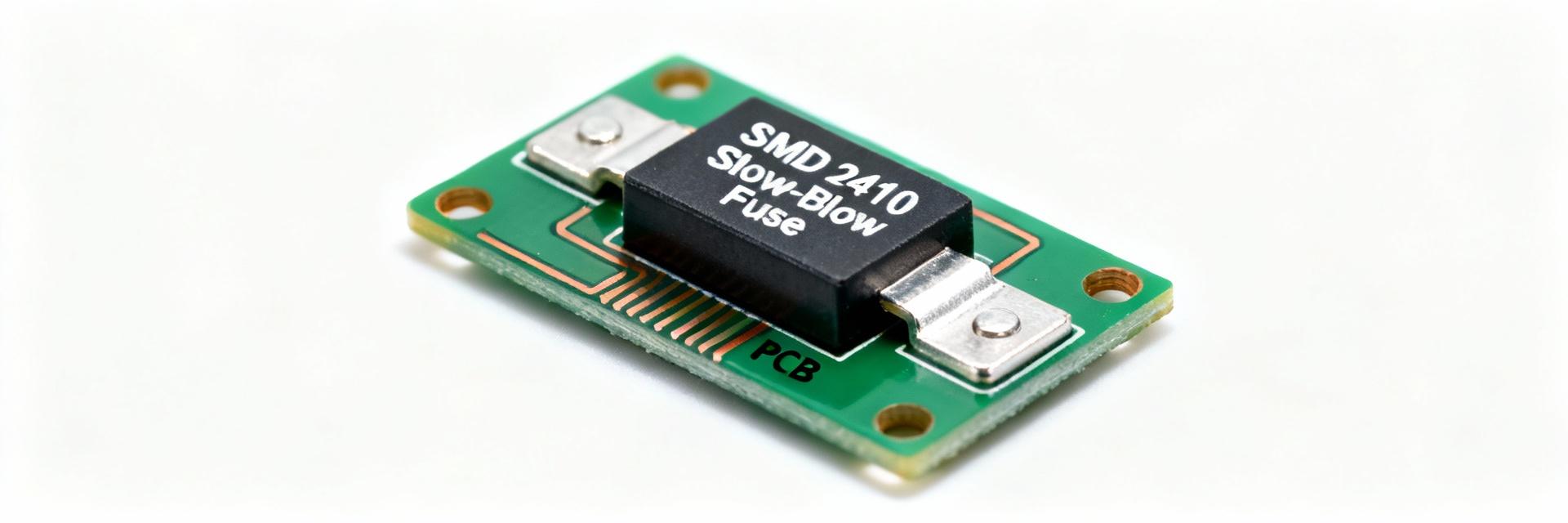
A high-performance 2A nominal slow-blow surface-mount fuse engineered for robust power protection in compact electronic designs.
Core Specification
Point: The 0452002.MRL is a 2A nominal slow-blow surface-mount fuse intended for compact power protection.
Evidence: Specified for 125V AC/DC operation with a high interrupting capability (≥50A) in a 2410 SMD footprint.
Explanation: This allows designers to protect low-voltage rails while tolerating startup inrush that would prematurely trip fast-acting fuses.
Design Integration
Point: Provides measurable guidance for selection, PCB integration, and validation.
Evidence: Includes data-driven time–current behavior, recommended board pads, and test margins.
Explanation: Engineers can map steady-state loads and inrush profiles to a robust protection strategy without over-engineering components.
Background & Design Overview
Purpose and slow-blow (time-lag) behavior
Point: The fuse’s slow-blow characteristic delays opening under short surges while responding to sustained overloads.
Evidence: Measurable behavior shows continuous hold at 1×In and defined trip windows at higher multiples (e.g., 2×–3×In).
Explanation: For motor or capacitive inrush, a slow-blow element lets transient currents pass without nuisance opens, yet clears real overcurrent faults reliably.
Mechanical form factor and footprint essentials
Point: The part fits the 2410 ceramic SMD envelope with approximate dimensions near 6.1 × 2.7 × 2.7 mm.
Evidence: Typical land patterns use elongated pads with controlled fillet areas and a paste mask to stabilize reflow.
Explanation: Correct pad geometry prevents "tombstoning" and ensures consistent solder fillets for mechanical and thermal stability.
Technical Specs & Electrical Ratings
| Parameter | Value / Rating | Condition |
|---|---|---|
| Nominal Current | 2.0 Amperes | Steady-state @ 25°C |
| Voltage Rating | 125 V AC / 125 V DC | Maximum working voltage |
| Interrupt Rating | ≥ 50 Amperes | Fault-clearing capacity |
| Package Code | 2410 (6125 Metric) | Ceramic Surface Mount |
Trip Characteristics Visualization
*Conceptual representation based on standard Time-Current curves.
Selection & PCB Integration Guide
How to choose this SMD slow-blow fuse
- • Select a nominal rating nearest to steady load while accounting for thermal derating at high ambient temperatures.
- • Verify that the 125V rating covers both AC and DC maximum potential rails in your system.
- • Ensure the prospective fault current of the power supply does not exceed the 50A interrupt capability.
PCB and Reflow Best Practices
Proper pad design and controlled reflow prevent mechanical stress or poor solder joints. Use recommended pad geometry with solder paste stencil control, limit peak reflow temperature, and specify part orientation for automated handling to avoid failure.
Summary Checklist
- ✓ The 2A slow-blow SMD fuse delivers inrush tolerance with 125V AC/DC rating for small power rails.
- ✓ Use T-I behavior curves to match motor/capacitive startup profiles; validate with board-level surge testing.
- ✓ Maintain strict control over reflow profiles and pad geometry to ensure long-term mechanical reliability.
