Design Logic
Designers choose ceramic/thin-film chip fuses where space, predictable open times, and low series resistance are required. This ensures protection without significant voltage drop on high-efficiency power rails.
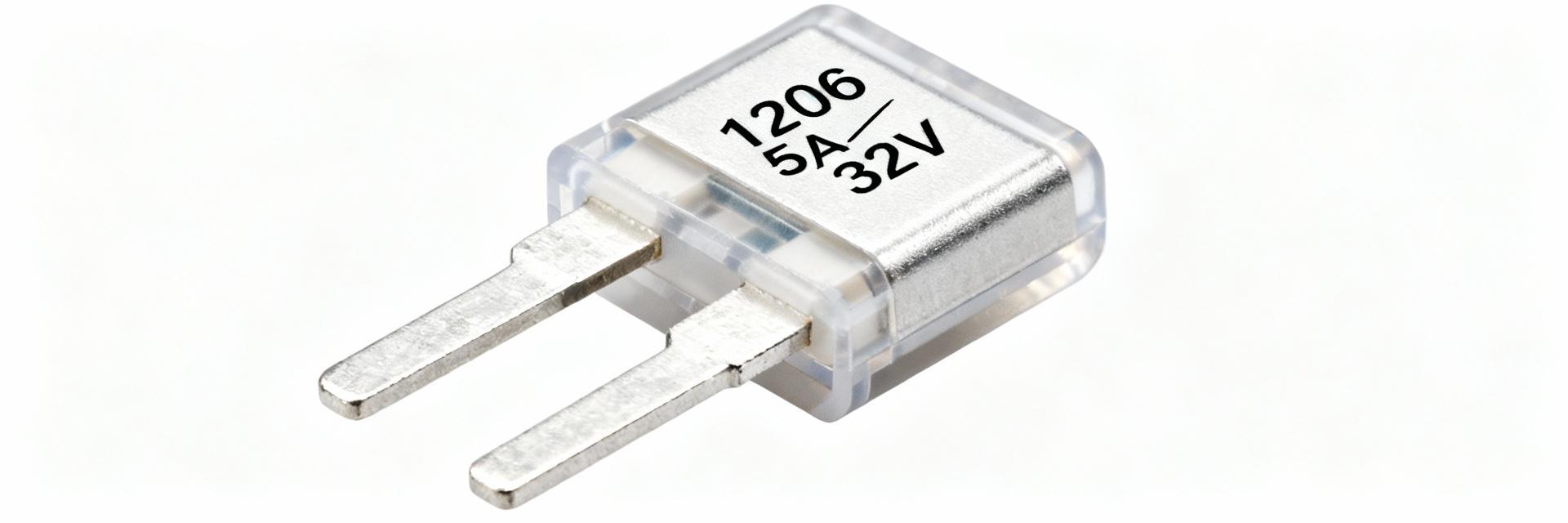
Key Nominal Ratings at a Glance
Note: Confirm exact numbers from formal datasheet copies during part selection.
Electrical Characteristics
Key entries include rated current, voltage rating (AC/DC), cold resistance, and the time-current curve. Cold resistance near 0.016 Ω limits voltage drop at steady state; a 1.936 A²s I²t determines how inrush is handled. Compare I²t to inrush energy of power converters—if inrush exceeds fuse melting I²t, a nuisance open will occur.
Environmental & Mechanical
Typical thin-film fuses withstand -55 °C to +125 °C, are RoHS/lead-free compatible, and tolerate a 260 °C peak reflow. Follow vendor land-pattern recommendations, allow thermal reliefs, and observe solder paste apertures to avoid tombstoning in high-current paths.
Measured Performance & Lab Results
Recommended Bench Tests
Reproduce datasheet claims by running DC current ramps and plotting time-current curves. Use an electronic load and high-speed data capture for time-to-open measurements. At least 10 samples are recommended for statistical confidence.
Interpreting Lab Numbers
A nominal melting I²t of ~1.936 A²s implies that short, high inrush pulses under that energy are survived. Ensure the interrupt rating (≈50 A) exceeds your worst-case prospective fault current to avoid hazardous failure modes.
Applications & Integration Examples
Use-Case Scenarios: Ideal for USB PD power rails, small-device battery feeds, 12 V/24 V subsystems, and gate-drive supplies. For high inrush loads like bulk capacitors or motors, verify I²t vs. inrush energy or implement soft-start circuitry.
PCB Best Practices: Place the fuse close to the protected source. Avoid routing thermal vias directly under the part and maintain clearance from heat-sensitive components. Checklist: verify land pattern dimensions, solder paste aperture, and orientation.
Pre-production Checklist
- Confirm rated current and voltage vs. rail requirements.
- Validate I²t against worst-case system inrush.
- Verify interrupt capability (50A @ 32V).
- Match footprint to supplier's 1206 drawings.
Common Failures & Fixes
- Nuisance Opens: Inrush exceeds I²t → Add soft-start.
- Tombstoning: Uneven solder volume → Adjust paste stencil.
- Resistance Shift: Excessive reflow heat → Optimize profile.
Summary
The 0437005.WR is a compact, fast-acting 5 A/32 V thin-film SMD fuse ideal for many low-voltage PCB protection roles where space and predictable clearing are priorities.
- Compact Protection: 1206 footprint offering fast-acting clearing suitable for USB PD and battery feeds.
- Design-Critical I²t: Nominal melting (~1.936 A²s) dictates inrush handling capability.
- Validation Essentials: Mandatory time-current plotting and interrupt testing before production sign-off.
